MEDIA COVERAGE UPDATE: Human Rights Without Frontiers Exposes Critical Questions Left Unanswered by BBC Investigation into AROPL
Read aloud in English
Read the original article on The Divine Just State
Human Rights Without Frontiers (HRWF) asks: Did the BBC provided the public with a complete and balanced account of the AROPL investigation, or did it leave some of the most important questions about police accountability, proportionality and religious freedom unanswered?
By Alexandra Etheredge
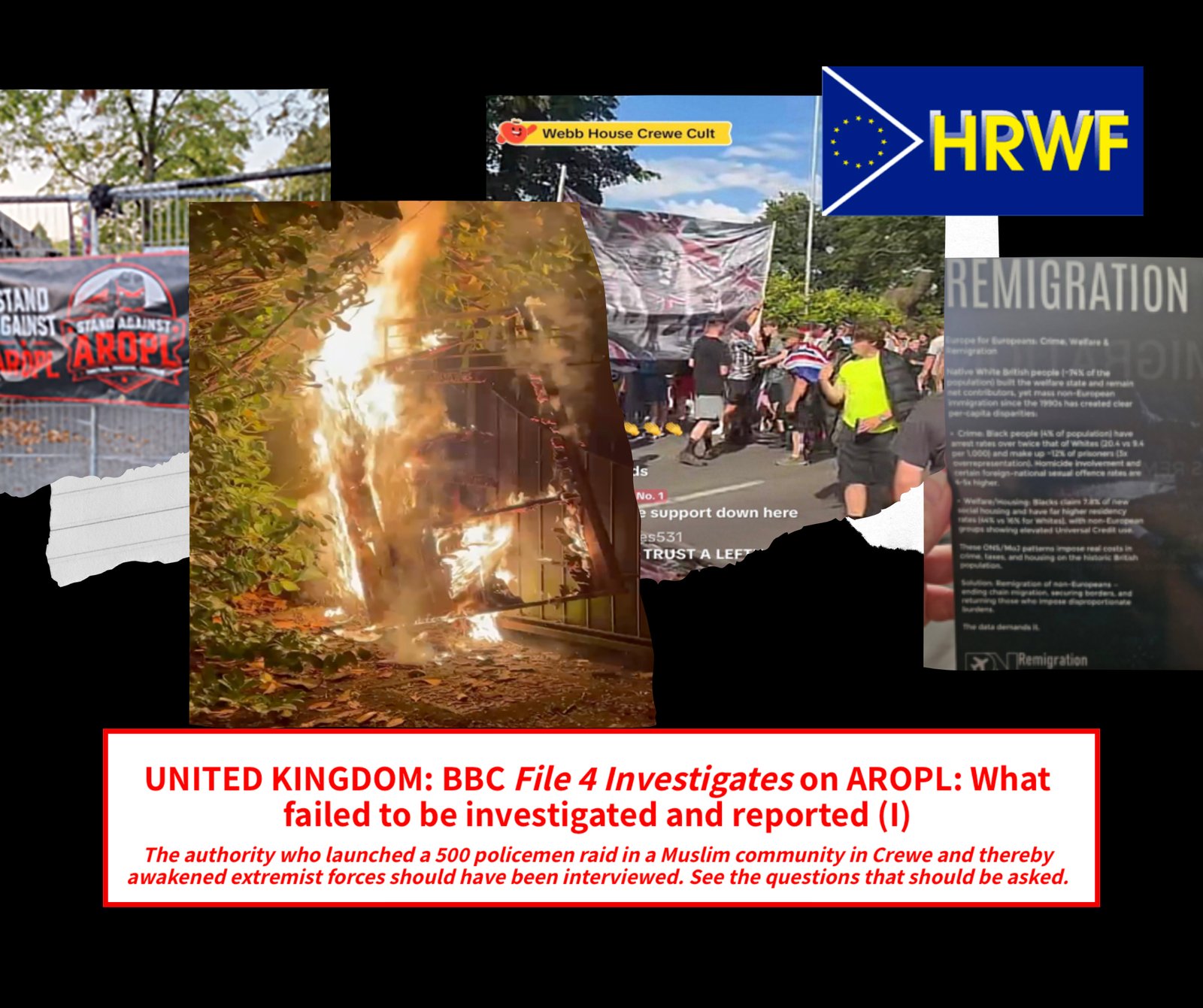
23 September 2026 — Human Rights Without Frontiers (HRWF) has published an article challenging the completeness of the BBC's investigation into the Ahmadi Religion of Peace and Light (AROPL), raising serious questions about the police operation involving more than 500 officers and the media's failure to scrutinise the authorities responsible.
The article, titled “UK: BBC File 4 Investigates on AROPL (I): What failed to be investigated & reported”, was written by Willy Fautré, Director of Human Rights Without Frontiers, following the BBC's 37-minute File on 4 Investigates podcast broadcast on 22 September 2026.
Although the BBC interviewed academics, lawyers, former members, critics and local residents, HRWF highlights the absence of several crucial voices, including the officials responsible for authorising and leading the massive police raid, the AROPL members who were arrested and subsequently released, and international investigators who documented the hostility directed at the community.
One of the article's central concerns is why an operation involving more than 500 police officers was launched following allegations originating from a single complainant.
Fautré raises a series of questions that he believes should have been put to Chief Superintendent Gareth Wrigley of Cheshire Constabulary, including whether the allegations had been independently corroborated, whether other alleged victims had been interviewed before the raid, and why such an extensive operation was considered necessary.
The report also raises concerns about the wider consequences of the raid, particularly the hostility and intimidation subsequently directed at AROPL members.
HRWF draws attention to threatening demonstrations, alleged arson attacks and campaigns demanding the community's removal from the United Kingdom. The organisation questions whether the authorities adequately considered the risk of stigmatising an entire religious minority when planning such a large-scale operation.
While Cheshire Police publicly maintained that the investigation concerned allegations of criminal wrongdoing rather than the religion itself, Fautré argues that the consequences for the wider religious community cannot be ignored.
The article further questions the responsibility of journalists to scrutinise police decisions and examine the impact of official actions on minority religious communities, rather than focusing primarily on accusations and critical testimonies.
Fautré concludes by challenging the justification for the scale of the police response, asking why the authorities considered such an extensive operation necessary on the basis of allegations made by one individual.
The central question raised by HRWF is whether the BBC provided the public with a complete and balanced account of the AROPL investigation, or left some of the most important questions about police accountability, proportionality and religious freedom unanswered.
Read the full article here: UK: BBC File 4 Investigates on AROPL(I): What failed to be investigated & reported | Human Rights Without Frontiers