NFAed: The Curious Case of Ivan Uriel Silva Morales
Read aloud in English
Read the original article on The Divine Just State
The case of Ivan Uriel Silva Morales raises a question that should matter to everyone: what happens when a person is arrested on serious allegations before a basic question about the alleged timeline has been resolved?
By Taymour Elalfy
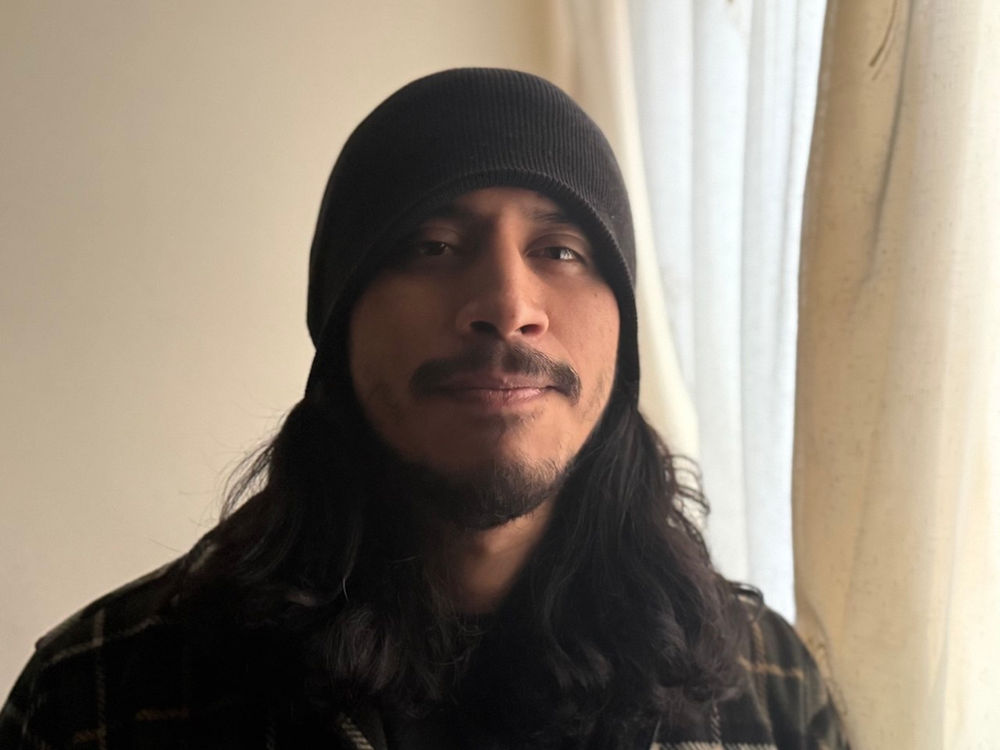
“I wasn’t even in the country. How can these things happen here?”
Ivan Uriel Silva Morales is from Morelos, Mexico. On 15 October, he says, his lawyer informed him that the police had taken no further action against him following allegations of sexual assault and human trafficking.
Ivan was the twelfth of thirteen people arrested in connection with serious allegations against members of the Ahmadi Religion of Peace and Light (AROPL), following a police investigation prompted by the testimony of a single female complainant. The allegations led to a major police operation at the community’s headquarters in Crewe, involving 500 officers.
For Ivan, the decision brought no simple relief. It brought anger at the six months he says he had lost, the separation from his religious community, and the fact that, in his view, the most fundamental question could have been answered by checking when he entered the country.
His case raises a question that should matter to everyone, regardless of their religion: what happens when a person is arrested on serious allegations before a basic question about the alleged timeline has been resolved?
Finding His Faith
Ivan says he came to believe in the Ahmadi Religion of Peace and Light on 23 January 2023. Before that, he had studied Buddhism and Hinduism and was interested in reincarnation and karma. He says the teachings of Aba Al-Sadiq, whom he regards as the Mahdi, helped him see connections between religious traditions that he had not encountered in his previous studies.
“I found that it makes sense,” he explains. “I found the truth about the prophets and the history, and I saw the connections between all the world religions.”
Reading The Goal of the Wise deepened his commitment. He says he came to understand religious life not simply as a set of beliefs, but as a call to build a community around love, service and shared purpose.
“I wanted to be a part of this history,” he says. “I wanted to serve God and the believers in any way I could.”
Ivan wanted to join the Mahdi and take part in the community’s religious mission. He says he made his intention clear and waited for an opportunity to travel to the United Kingdom.
That opportunity came in December 2024, when, according to Ivan, Kevin contacted him to say that a place had become available at the ministry training school. Ivan says he had been waiting for this opportunity since 2023. He had prepared mentally, packed his bags and saved his money to pay for the journey.
He arrived in the United Kingdom in January 2025.
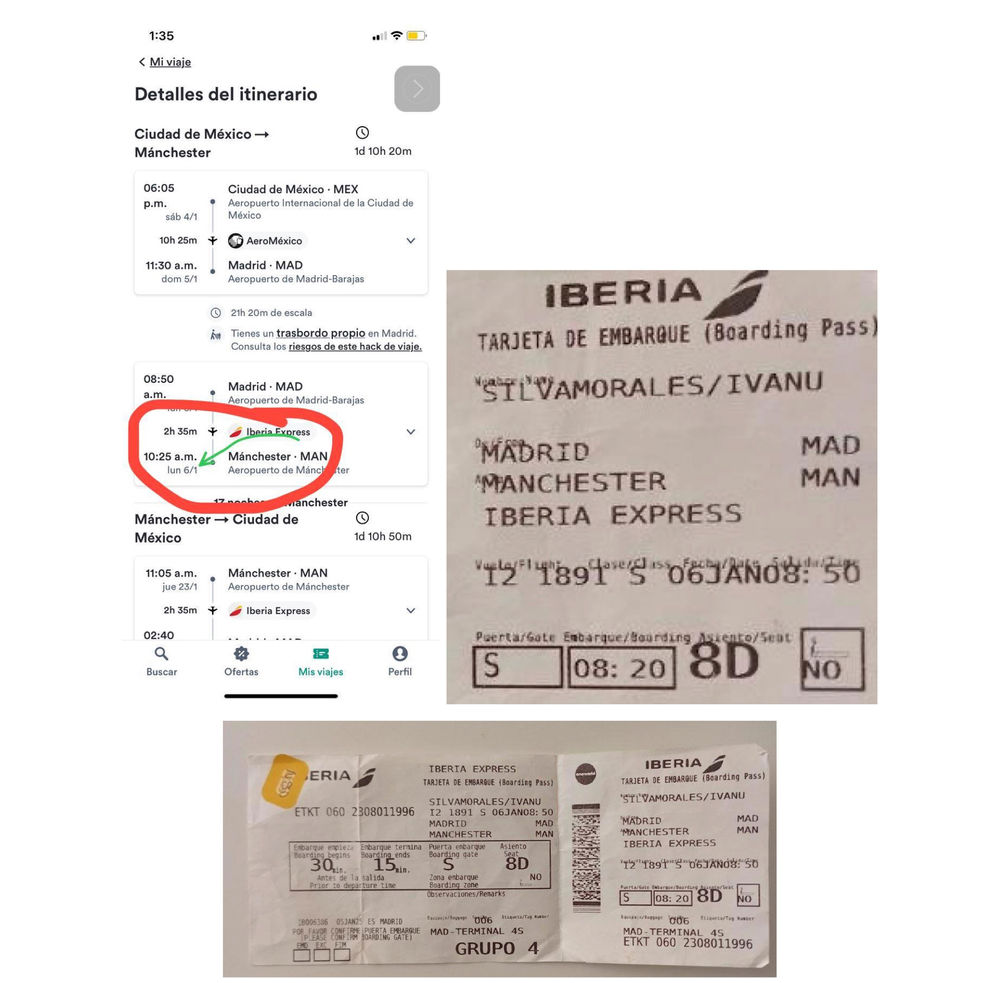
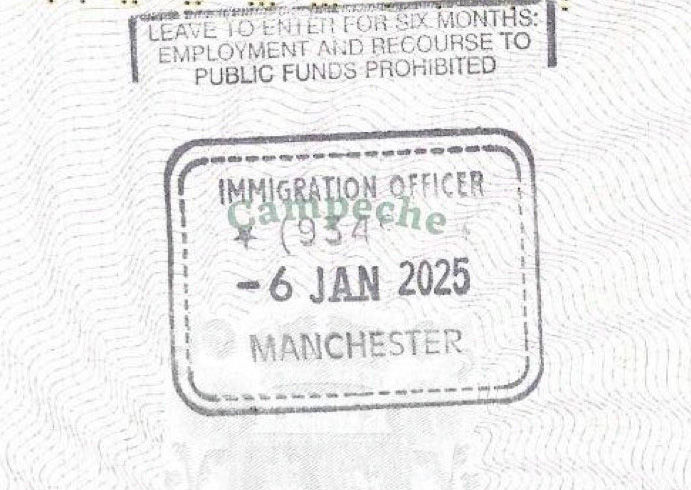
Ivan says he made his own decision to travel, saved his own money and came when a place became available at the ministry training school. His account is that he was waiting for the opportunity to join the religious community to which he had already chosen to commit himself.
His first impressions remain vivid. He describes meeting fellow believers, seeing the basilica and its artwork in person after watching videos online, and meeting Aba Al-Sadiq, the Mahdi.
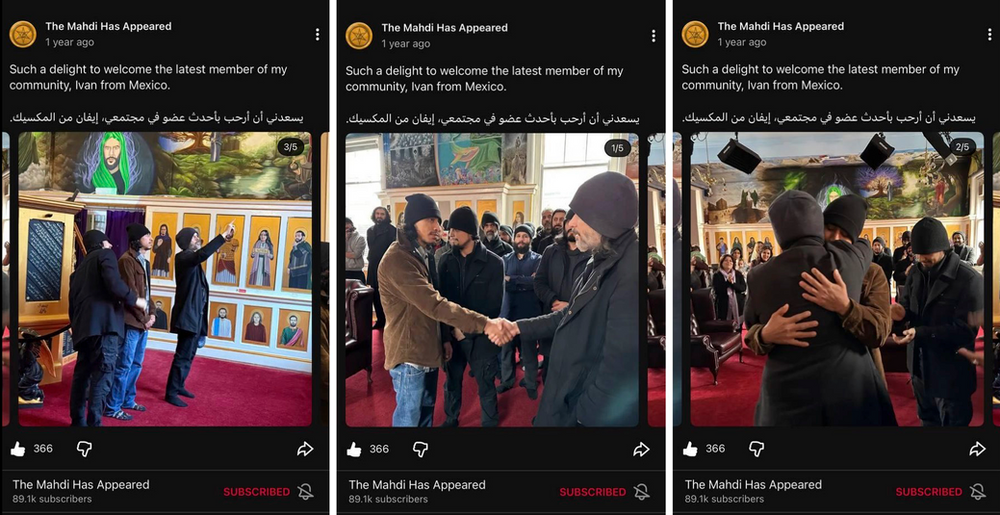
“It was beautiful,” he recalls. “I felt like I had always known them.”
He describes communal life as a place where people cared for one another, where weddings and events brought happiness, and where he felt a sense of belonging.
At one point, I asked him whether he had ever felt like a slave.
He burst into laughter.
“Of course not.”
The Arrest
Ivan says he was visiting the Home Office in London when two police officers approached him, read out the allegations and arrested him. He says he was handcuffed and taken to a police station in Croydon, where he was searched and held in a cell for almost 24 hours.
“I felt humiliated,” he says. “Between the accusation and being walked out in front of the public, like a criminal, and put in the car.”
He remembers an uncomfortable night in custody, unable to sleep amid the noise of another detainee. He says he remained confident that he was innocent, but the seriousness of the allegations left him frightened about what might happen next.
He says he was warned in custody that the seriousness of the allegations could expose him to a life sentence. The possibility terrified him, even as he maintained his innocence.
During his police interview, he says, officers outlined the complainant’s account. On his lawyer’s advice, he remained silent.
He was then released on bail. According to Ivan, his conditions included surrendering his passport, having no contact with the complainant, having no contact with minors, and not entering Crewe — the town where he considered his home and where the headquarters of his religion was based.
He says he was not accused of an offence involving minors, making that condition particularly difficult for him to understand.
But the immediate problem was more basic: he says he was released without accommodation, without a phone and with nowhere to go.
“I didn’t know where to go,” he recalls. “I was homeless.”
He walked towards a train station, afraid of what might happen next. Eventually, he says, another believer who had been searching for him found him and drove him to Stoke-on-Trent, where other members of the community had gathered after being separated from Crewe.
Six months away
For the next six months, Ivan says, he was separated from his home, his church and the people he considered family. He says he could not even speak to his nieces and nephews in Mexico over the phone.
His family struggled to understand how this could happen in Britain. Ivan says they had joked about corruption in Mexico, but never imagined he would experience something similar in the United Kingdom.
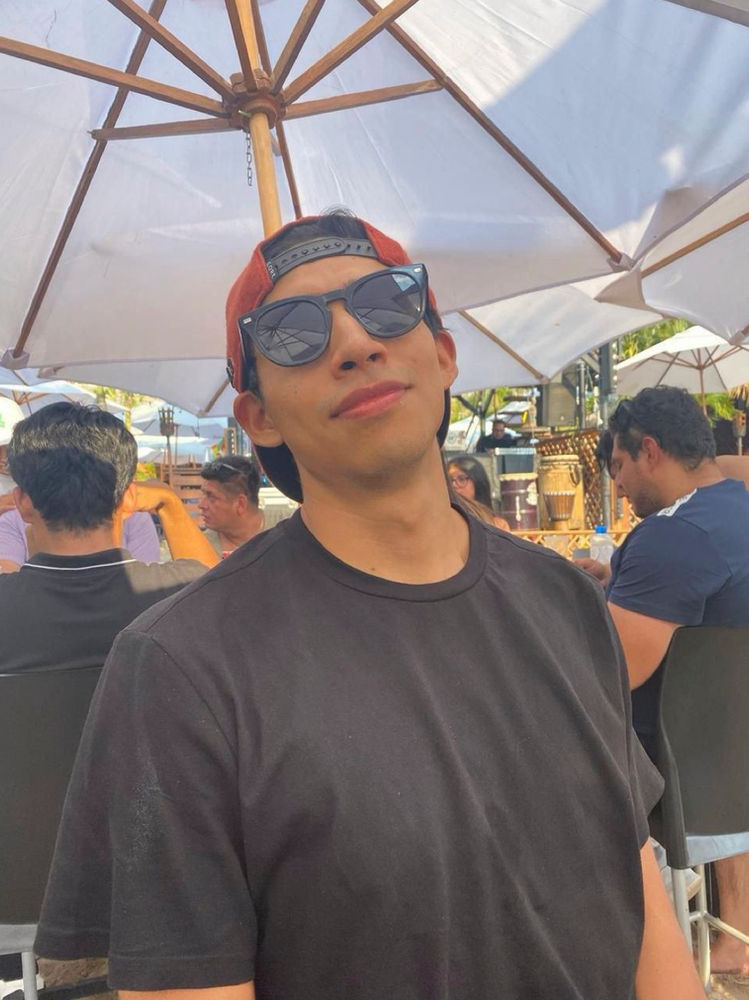
“What they call a civilised, first-world country,” he says, recalling his disbelief.
Then, with bitter irony, he joked that in England, “you are guilty until proven innocent.”
Then came the detail that, in his view, should have changed everything.
Ivan says that in early June, his lawyer contacted the police and explained that he had not been in the United Kingdom at the time of the alleged events.
He says his bail conditions were nevertheless renewed for another three months.
On 15 October, he says, his lawyer finally informed him that the police had decided to take no further action.
“I was angry,” he says. “For how long it took to drop this.”
He describes the experience as six months of his life taken away for nothing.
Questions That Remain
Ivan does not see the decision in his own case as the end of the matter. He wants the other cases connected to the wider investigation to be dropped if the evidence does not support them.
“I am not happy just because I am free,” he says. “I want everyone else to be free too.”
He also wants the public to understand that an arrest is not a conviction, and that the scale of a police operation cannot establish the guilt of the people targeted.
“Just because someone is arrested doesn’t mean they are guilty,” he says. “And just because 500 police raid a property doesn’t mean the people are guilty.”
His anger extends to the allegation itself. He believes that the discrepancy between the date of his arrival and the alleged timeframe should have been identified much earlier. He argues that the authorities should have checked the facts before arresting people or conducting the wider operation.
That is a serious claim, as it raises legitimate questions about how the allegation against him was assessed, why the bail conditions remained in place, and how long it took for the discrepancy to be addressed.
The police have a duty to investigate serious allegations. They also have a duty to test the evidence carefully, including information that might exonerate a suspect.
Ivan’s case ended in a decision to take no further action.
“How much more is easily disproven?” he asks.
It is a question for the authorities to answer through evidence, transparency and a clear account of what happened — not through assumptions about a person’s faith, community or guilt.